Most Jews and Christians believe Moses received and wrote the entire Torah: five books of Genesis, Exodus, Leviticus, Numbers and Deuteronomy. In modern times, Biblical scholarship using textual criticism and other techniques has disputed this claim.
The table below lists Biblical scholars and academics who dispute the "Moses' authorship" claim in favour of the JEDP Theory ('Graf-Wellhausen Hypothesis') or similar model.
| Arthur Peake | 1929 AD |
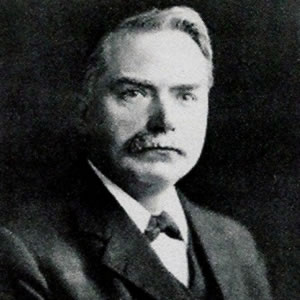 Arthur Samuel Peake (1865-1929) was an English biblical scholar, born in Leek, Staffordshire.Peake was educated at St John's College, Oxford. He was the first holder of the Rylands Chair of Biblical Criticism and Exegesis in the University of Manchester, from its establishment as an independent institution in 1904.Peake popularized modern biblical scholarship, including the new "higher criticism." He approached the Bible not as the infallible word of God, but a record of revelation written by fallible humans. |
| Robertson Smith | 1894 |
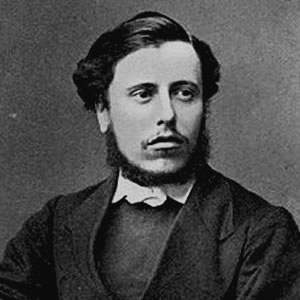 William Robertson Smith (1846-1894) was a Scottish orientalist, Old Testament scholar, professor of divinity, and minister of the Free Church of Scotland.Smith is known for his book "Religion of the Semites", which is considered a foundational text in comparative studies of religion. His criticisms include the following: |
| Abraham Kuenen | 1891 |
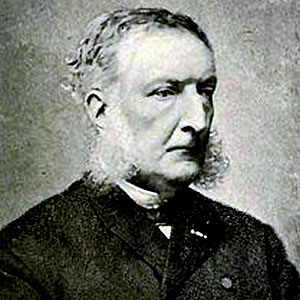 Abraham Kuenen (1828-1891) was a Dutch Protestant theologian, the son of an apothecary.Kuenen was born in Haarlem. He was educated at the University of Leiden. He studied theology, and won his doctor's degree by an edition of 34 chapters of Genesis from the Arabic version of the Samaritan Pentateuch. In 1853 he became professor extraordinarius of theology at Leiden, and in 1855 full professor.Kunen was known throughout Europe and America as one of the greatest scholars of the century. He shared with Wellhausen ('Graf-Wellhausen Hypothesis') acknowledged leadership in the field of Old Testament criticism. 2 |
| Eduard Reuss | 1891 |
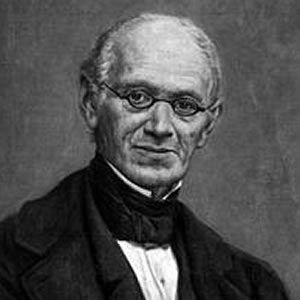 Eduard Reuss (1804-1891) was a Protestant theologian.From 1829 to 1834 he taught Biblical criticism and Oriental languages at the Strasbourg Theological School. In 1864, he became Professor of Old Testament.Reuss turned his attention to Old Testament criticism. His critical position was to some extent that of K. H. Graf and Julius Wellhausen. He was in a sense their forerunner, and was actually for a time Graf's teacher. |
| Julius Wellhausen | 1883 |
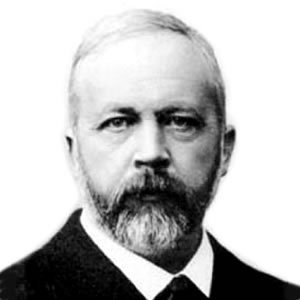 Julius Wellhausen (1844-1918) was a German biblical scholar and orientalist.In 1883, Julius Wellhausen published his JEDP Theory ('Graf-Wellhausen Hypothesis'). Wellhausen's work proved very influential. He was able to correlate the development of the Torah with Israelite and Jewish history.Wellhausen's theory held the Torah was not a unified work from a single author (Moses) but instead was made up of multiple, independent texts written over many centuries by many different writers. Wellhausen set the chronological order of the independent sources as J, E, D and P with reference to the evolving religious history of Israel, which he saw as one of ever-increasing priestly power. |
| Wilhelm Vatke | 1882 |
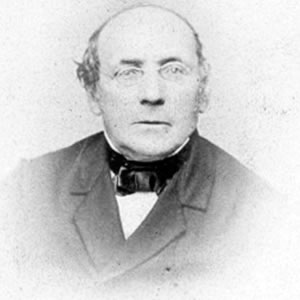 Wilhelm Vatke (1806-1882) was German Protestant theologian.He was appointed in 1837 professor extraordinarius. He was one of the founders of the newer Hexateuch criticism.Vatke issued his book, "Die Religion des Alten Testaments", which contained the seeds of a revolution for the Old Testament. In future, Vatke's ideas were associated with progressive Torah studies by the names of Abraham Kuenen and Julius Wellhausen. |
| Karl Heinrich Graf | 1869 |
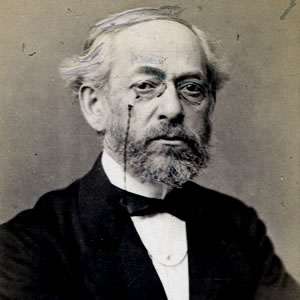 Karl Heinrich Graf (1815-1869) was a German Old Testament scholar and orientalist.He studied Biblical exegesis and oriental languages at the University of Strassburg under Édouard Reuss, and, after holding various teaching posts, was made instructor in French and Hebrew at the Landesschule of Meissen, receiving in 1852 the title of professor.Graf was one of the chief founders of Old Testament criticism. Graf taught the Torah we currently possess was largely the product of the weaving together of four independent texts: Jehovist, Elohist, Deuteronomy and Priestly ("JEDP Theory"). These different documents developed at different times during the history of Israel, and were eventually brought together to form our current Torah. 5 |
| Hermann Hupfeld | 1853 |
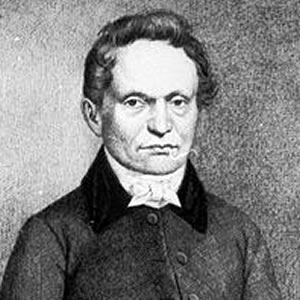 Hermann Hupfeld (1796-1866) was a Protestant German Orientalist and Biblical commentator.He is known for his historical-critical studies of the Old Testament. He was born at Marburg, where he studied philosophy and theology from 1813 to 1817. In 1825, Hupfeld was appointed extraordinary professor of theology at Marburg. There he received professorships of theology and Oriental languages.In 1853, Hupfeld on the JEDP Theory ("Gaff-Wellhausen"), suggested Elohist (E) was really two sources and should be split, thus isolating the Priestly (P) source. Hupfeld also emphasized the importance of the Redactor, or final editor, in producing the Torah from the four JEDP sources. |
| Heinrich Ewald | 1823 |
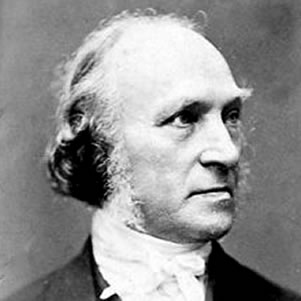 Heinrich Ewald (1803-1875) was a German orientalist, Protestant theologian, and Biblical exegete.He studied at the University of Göttingen. In 1827 he became extraordinary professor there, in 1831 ordinary professor of theology, and in 1835 professor of oriental languages.Ewald maintained the Elohistic (E) source was basic for the composition of the Torah. He suggested this work had been supplemented by the addition of older sections such as the Decalogue (D). Finally, a compilation of sources (Jehovistic or J) were placed in the basic Elohistic (E) document. In essence, Ewald was suggesting that at different periods, the [Torah] books underwent a revision each time new additions were incorporated. 6 |
| Friedrich Bleek | 1822 |
Friedrich Bleek (1793-1859) was a German Biblical scholar.In 1822, he identified Joshua as a continuation of the Torah via Deuteronomy. Others had identified signs of the Deuteronomist in Judges, Samuel and Kings. |
| Wilhelm de Wette | 1805 |
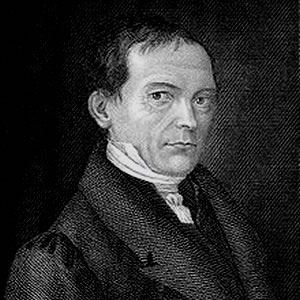 Wilhelm de Wette (1780-1849) was a German theologian and biblical scholar.In 1805, De Wette concluded that Deuteronomy represented a third independent source. Also,the Torah was composed after the time of David.In general, the Torah we possess was largely the product of weaving together four independent texts: Jehovist, Elohist, Deuteronomy and Priestly (JEDP Theory). These different documents developed at different times during the history of Israel, and were eventually brought together to form our current Torah. 5 |
| Alexander Geddes | 1800 |
Alexander Geddes (1737-1802) was a Scottish theologian and scholar.His translation of the "Satires of Horace" made him known as a scholar, but his liberalism led to his suspension.Geddes postulated that the Torah was put together in Solomon's era (990-931 BCE) from a number of fragments, some of which existed before the time of Moses. |
| Johann Gottfried Eichhorn | 1780 |
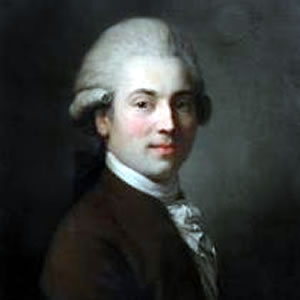 Johann Gottfried Eichhorn (1752-1827) was a German Protestant theologian of the Enlightenment and an early orientalist.In 1775 he was made professor of Oriental languages at the Faculty of Theology at Jena University. During his professorship in Jena he wrote his seminal Introduction to the Old Testament, a breakthrough in the historical understanding of the Torah.Eichhorn has been called "the founder of modern Old Testament criticism." In 1823, Eichhorn concluded that "most of the writings of the Hebrews passed through several hands." Eichhorn regarded many books of the Old Testament as fictitous and fake. Moses had had no part in writing any of it. |
| Jean Astruc | 1766 |
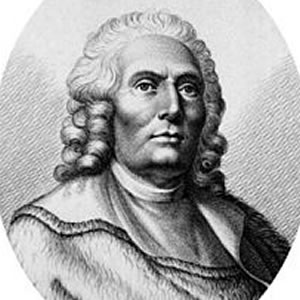 Jean Astruc (1684-1766) was a professor of medicine at Montpellier and Paris.He wrote the first great treatise on syphilis and venereal diseases. He played a fundamental part in the origins of critical textual analysis of works of scripture.Astruc was the founding father of biblical criticism. He used the pattern of divine names YHWH and Elohim in Genesis and Exodus, to explain the contradictory Biblical accounts. Astruc suggested Moses wrote Genesis based on two different sources, the Yahwist (J) and Elohist (E) traditions, known as Documentary Hypothesis (DH). |
| Campegius Vitringa | 1689 |
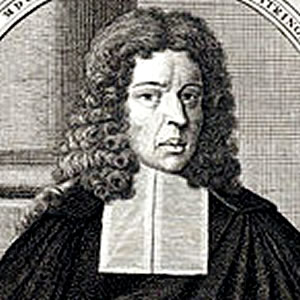 Campegius Vitringa (1659-1722) was a Dutch Protestant theologian and Hebraist.Vitringa, a follower of Johannes Cocceius, was a supporter of prophetic theology. He was educated at the universities of Franeker and Leiden, and became professor of Oriental languages in 1681.Vitringa in his work entitled "Observationes Sacrae" suggested that Moses had access to ancient sources from the patriarchal period (1813-1506 BCE). |
| John Hampden | 1688 |
John Hampden was a 17th century English scholar.Hampden affirmed affirmed Richard Simon's views, that Moses could not be the author of much of the [Torah] writings attributed to him. |
| Richard Simon | 1678 |
Richard Simon (1638-1712) was a French priest, a member of the Oratorians.He was an influential biblical critic, orientalist and controversialist. Simon was influenced by the ideas of Isaac La Peyrère who came to live with the Oratorians, and by Baruch Spinoza.Unlike the arguments made by previous men, Simon was the first prominent Christian leader who denied Mosaic authorship, creating conflict between him and both Catholics and Protestants alike. Simon declared that Moses could not be the author of much of the [Torah] writings attributed to him. |
| Isaac de la Peyrère | 1676 |
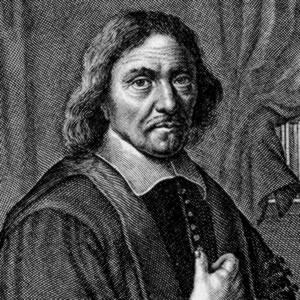 Isaac La Peyrère (1596-1676) was a French theologian, Bible critic and anthropologist.La Peyrère was a lawyer by training and a Calvinist by upbringing, though he later converted to Catholicism.Peyrere wrote the "Praeadamitae" book which was banned and burned everywhere for various heretical claims, including Moses did not write the Torah, and that no accurate copy of the Bible exists. 3 |
| Jean Morin | 1659 |
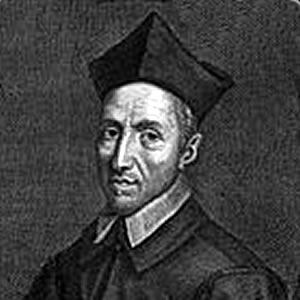 Jean Morin (1591-1659) or 'Joannes Morinus' was a French theologian and biblical scholar.He invigorated discussions with a traditional-critical thesis that doubted the integritas of the Old Testament.In Morin's view, the Hebrew text of the Old Testament was certainly not deliberately falsified, nevertheless, due to the careless work of copyists it was garbled to such an extent that it does not represent an authentic basis. 4 |
| Louis Cappel | 1658 |
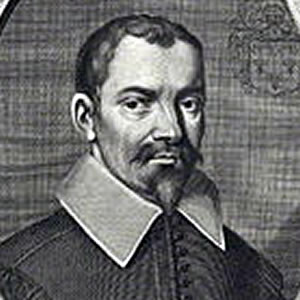 Louis Cappel (1585-1658) was a French Protestant churchman and scholar.He studied theology at the Academy of Sedan and the Academy of Saumur, and Arabic at the University of Oxford. At the age of twenty-eight he accepted the chair of Hebrew at Saumur, and twenty years later was appointed professor of theology.Cappel's second important work, "Critica sacra", went further, and was controversial from a theological point of view. Based on the various readings in text and differences between the ancient versions and Masoretic text, the consonantal text of the Hebrew Bible was susceptible to change, corruption, and human interference, which amounted to an attack on the verbal inspiration of Scripture. |
| Baruch Spinoza | 1656 |
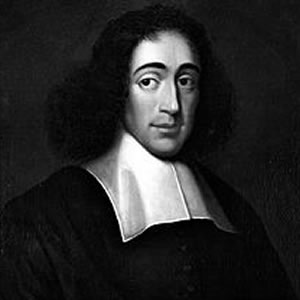 Baruch Spinoza (1632-1677) was a Jewish-Dutch philosopher of Portuguese Sephardi origin.Spinoza was raised in a Portuguese-Jewish community in Amsterdam. He developed highly controversial ideas regarding the authenticity of the Hebrew Bible and the nature of the Divine. By laying the groundwork for the Enlightenment and modern biblical criticism. He was considered one of the great rationalists of 17th-century philosophy.Spinoza's break with the prevailing dogmas of Judaism, and particularly his insistence on non-Mosaic authorship of the Torah, was not sudden; rather, he wrote of a lengthy internal struggle, "Indeed, I may add that I write nothing here that is not the fruit of lengthy reflection". Spinoza's analysis had a lasting impact on biblical criticism and laid the foundations for authorship theories to come. |
| Thomas Hobbes | 1651 |
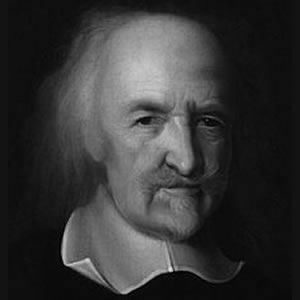 Thomas Hobbes (1588-1679) was an English philosopher who is considered one of the founders of modern political philosophy.In addition to political philosophy, Hobbes also contributed to a diverse array of other fields, including history, jurisprudence, geometry, the physics of gases, theology, ethics and general philosophy.In his major work "Leviathan", Hobbes writes, "It is therefore sufficiently evident that the five Books of Moses were written after his time, though how long after it be not so manifest" (pg. 173). Nonetheless, Hobbes still argues that Moses wrote the parts concerning the law itself. |
| Alfonso Salmeron | 1585 |
 Alfonso Salmeron (1515-1585) was a Spanish biblical scholar, a Catholic priest.He was one of the first Jesuits. He studied literature and philosophy at Alcalá and then philosophy and theology at the Sorbonne in Paris. The Jesuit tradition of biblical criticism starting with Alfonso Salmeron had paved the way for his approach. |
| Abraham Ibn Ezra | 1167 |
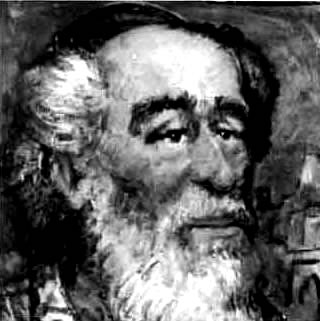 Abraham Ibn Ezra (1089-1167) was one of the most distinguished Jewish biblical commentators and philosophers of the Middle Ages.He was a proponent of the higher biblical criticism of the Torah as one of its earliest pioneers.Spinoza concluded that Ibn Ezra's hints about "the truth" throughout his commentary as "a clear indication it was not Moses who wrote the Torah but someone else who lived long after him, and it was a different book that Moses wrote" as sufficient evidence for Non-Mosaic authorship. Despite his affirmation of Mosaic authorship for the vast majority of the Torah, many scholars refer to Ibn Ezra as the "father of modern biblical criticism". 7 |
In Islam, Moses received the 'Oral' Torah
Islam teaches that Moses received the Torah from God. This was an 'oral transmission' from God through the Angel Gabrial to Moses. Today, the Torah is presented in a written book format. This is a corrupted version of the original Oral Torah. The JEDP Theory (or "Graf-Wellhausen Hypothesis") supports the Islamic position on Biblical corruption.